

Mbogo Luganda Academy

A Heartfelt Thank You to Mbogo Luganda Academy Educators
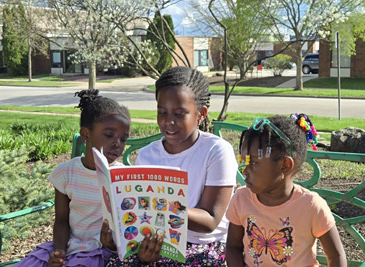
We offer our sincere appreciation to the educators, elders, cultural instructors, volunteers, and families who dedicate their time and wisdom to Mbogo Luganda Academy.
Through your patience, creativity, and commitment, children are learning the Luganda language. embracing their cultural identity, and building meaningful connections across generations. By teaching language, stories, values, and tra- ditions, you are safeguarding a living heritage and nurturing pride, belonging, and respect for culture.
Your role as teachers and cultural custodians is invaluable. Because of you, our language lives on, our children grow rooted and confident. and our community remains connected to its past and hopeful for its future.
Mweebalo nnyo nnyo bannagffe mwenna—thank you for teaching with love, dedication, and cultural pride.
About Mbogo Luganda Academy
Mbogo Luganda Academy was established in 2025 to preserve and promote the Luganda language and cultural heritage among children of the Ugandan diaspora, particularly in the Chicago area.
Tonny Makumbi, the founder, and his wife, Prossy Makumbi, are deliberately ensuring that their children learn and retain the Luganda language, which is native to them. Recognizing that many families lack structured opportunities to teach their heritage language at home, Mbogo Luganda Academy was created to bridge that gap and strengthen cultural identity.
Why Luganda Language Matters
Language is the heartbeat of culture. Without it, children born abroad risk losing connection to their roots, values, and ancestral wisdom.
The Luganda language:
• Strengthens cultural identity and pride
• Builds a sense of belonging within the global Ugandan community
• Bridges generations by enabling communication with elders
• Preserves traditions, values, and oral history
Our Luganda language teaching approach
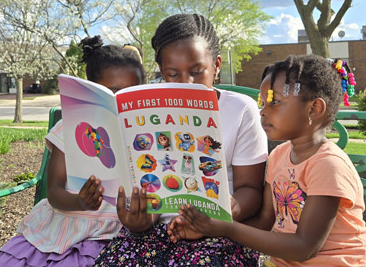
At Mbogo Luganda Academy, instruction focuses on authentic, real-life topics to facilitate natural language acquisi- tion. Rather than relying on rote memorization of isolated vocabulary and grammatical rules, students are encour- aged to learn Luganda as it is commonly spoken and applied in everyday contexts.
Each lesson incorporates:
• Relevant vocabulary
• Contextual grammar
• Question-and-answer patterns
• Affirmative and negative sentence structures
• Practical dialogues and genuine examples
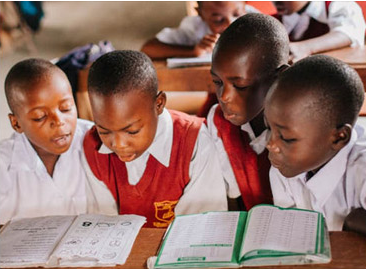
This topic-based methodology ensures that learning is intuitive, practical, and memorable, enabling learners to confidently use Luganda in real-world situations
Developing Comprehensive Communication Skills
Every lesson targets the development of four essential language competencies:
• Reading: Comprehension, pronunciation, recognition of words and sentences
• Listening: Understanding natural spoken Luganda and familiar expressions
• Writing: Accurate sentence formation and correct grammar usage
• Speaking: Real- life interaction, clarity, and self-assurance
All skills are integrated into each lesson to foster meaningful and effective communication.
Fluency and progress
Student advancement is assessed regularly through speaking, listening comprehension, vocabulary application, and sentence construction, supported by clear milestones and individualized feedback.
Curriculum and learner support
Instruction adheres to established standards for pedagogy, assessment, and learner support.
• The curriculum outlines teaching content, instructional methods, and progress evaluation criteria.
• Teachers uphold a safe, professional, and respectful classroom environment.
• To protect learners’ safety and maintain professionalism, teachers do not initiate personal contact outside
scheduled lessons.
Our Luganda class students and community
Mbogo Luganda Academy strives to serve a diverse global learner community. Our educational system is designed to accommodate varying learning speeds, backgrounds, and individual objectives.
Luganda lessons are provided for:
• Children of Ugandan immigrants in Chicagoland and other regions
• Travelers to Uganda, especially Luganda-speaking areas
• Non-Ugandans engaged in relationships with Luganda speakers
• Diaspora members reconnecting with Baganda heritage
• Researchers and students engaged in Luganda studies or translation
• Luganda speaking Immigrants seeking interpretation assistance for interviews
• Professionals and diplomats assigned roles in Uganda
• Tourists and personnel with non-governmental organizations in Uganda